
Understanding appliance age
How the date is found
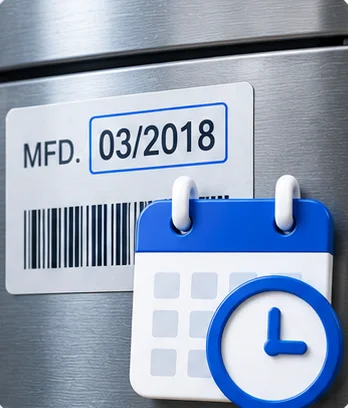
Some labels print the manufacture date outright (“MFD 03/2018”). That is the strongest evidence. Other labels use a serial date code, but not every brand publishes a decodable format. Some products need a printed date, original documents or manufacturer confirmation.
Appliance Age reads the label, works out which code the brand uses, and decodes the date. The result says where the date came from and how strong the evidence is.
Why there can be more than one possible year
Some brands reuse year codes. GE documents roughly twelve-year cycles; Bradford White uses a twenty-year cycle. A serial prefix may therefore leave several possible dates. The model, original documents and manufacturer confirmation can help distinguish them; condition alone does not prove the year.
Compare manufacturer-sourced masked examples and their format limits.
Made is not installed
The date is when the unit was built. It may have sat in a warehouse or store for months before it was installed.
Why the age matters
- Budgeting: compare the age with the typical life to plan replacements.
- Repair or replace: an expensive repair on an old unit is often not worth it.
- Warranty: the age tells you whether a warranty may still apply.
- Buying or selling a home: know what will need replacing soon.
- Safety: older gas and electrical appliances deserve a check, and recalls often cover specific years.